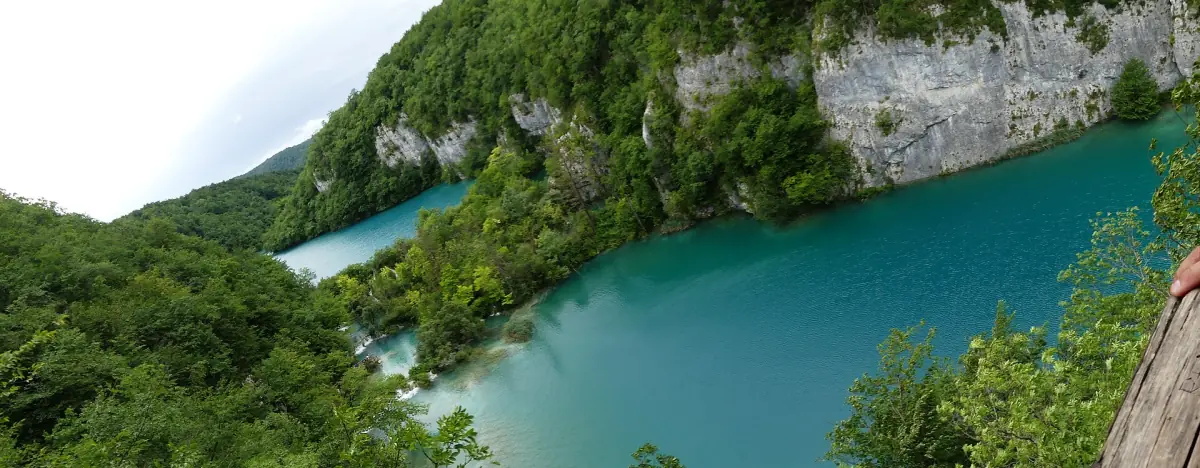
Plitvice Lakes facts at a glance
Plitvice Lakes National Park lies in a mountain region of Croatia between the Mala Kapela and Lička Plješivica ranges. It is a national park and a UNESCO World Heritage Site. The system has 16 named lakes, plus smaller lakes without a name, linked by cascades and waterfalls.
Prices and hours change by season, so read the facts below together with the current Plitvice Lakes tickets page before you plan a day.
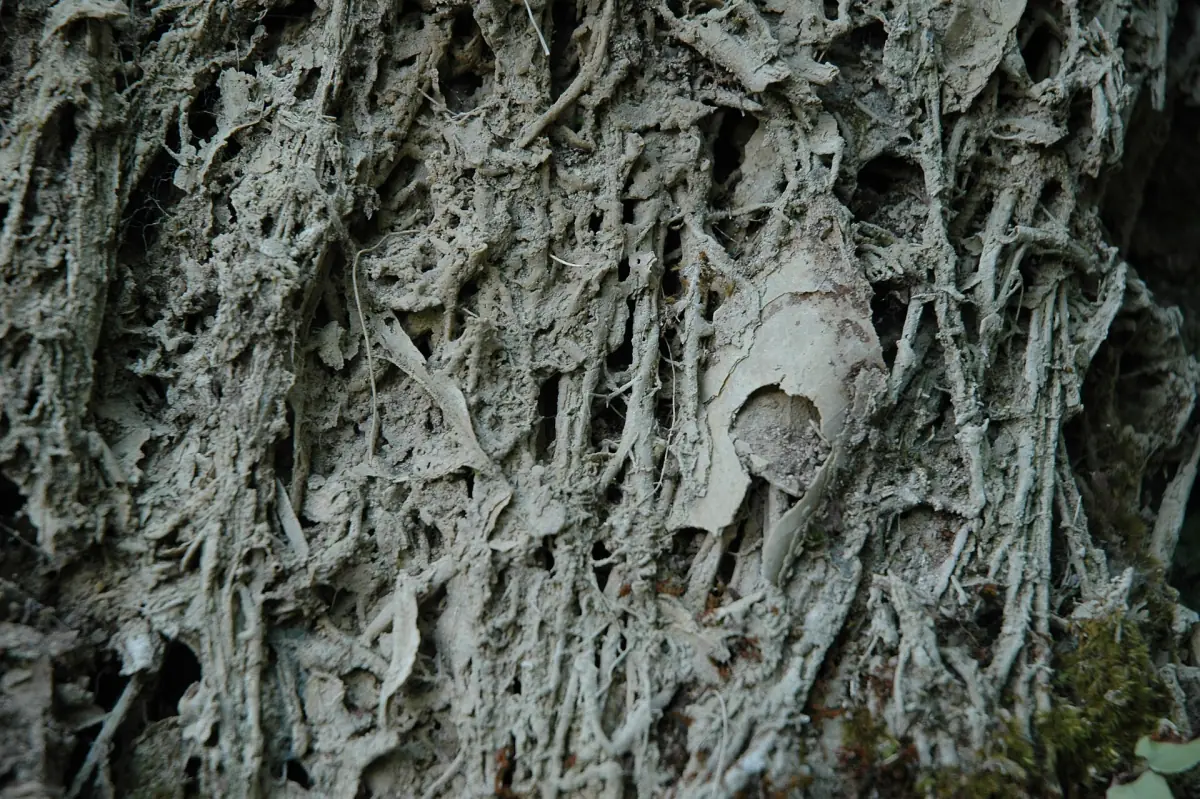
The 16 named lakes
The count covers named lakes only.
Twelve of the named lakes are upper lakes and four are lower lakes: Milanovac, Gavanovac, Kaluđerovac and Novakovića brod. Smaller lakes without a name come on top of the 16, and the cascades between the lakes are part of the same water system. So "16 lakes" is a count of named lakes, not of every body of water in the park.
| Topic | Fact |
|---|---|
| Named lakes | 16, of which 12 upper and 4 lower |
| Protection | National park and UNESCO World Heritage Site |
| UNESCO listing | 1979, with boundary changes in 2000 and 2025 |
| National park expansion | 1997 |
| World Heritage area | 29,581.71 ha, criteria (vii), (viii) and (ix) |
| Veliki slap height | 78 m, or 62 m to the first pool and 87 m with the cascades |
| Opening | 365 days a year, hours depend on the season |
Our pick: see it with a guide
Our take: a driver-guide explains the park on a day from Zagreb.
Hand-picked tours, booked through GetYourGuide. Prices are indicative starting prices in euros (as of October 2026). Tap a tour for live availability and the current price in your currency.
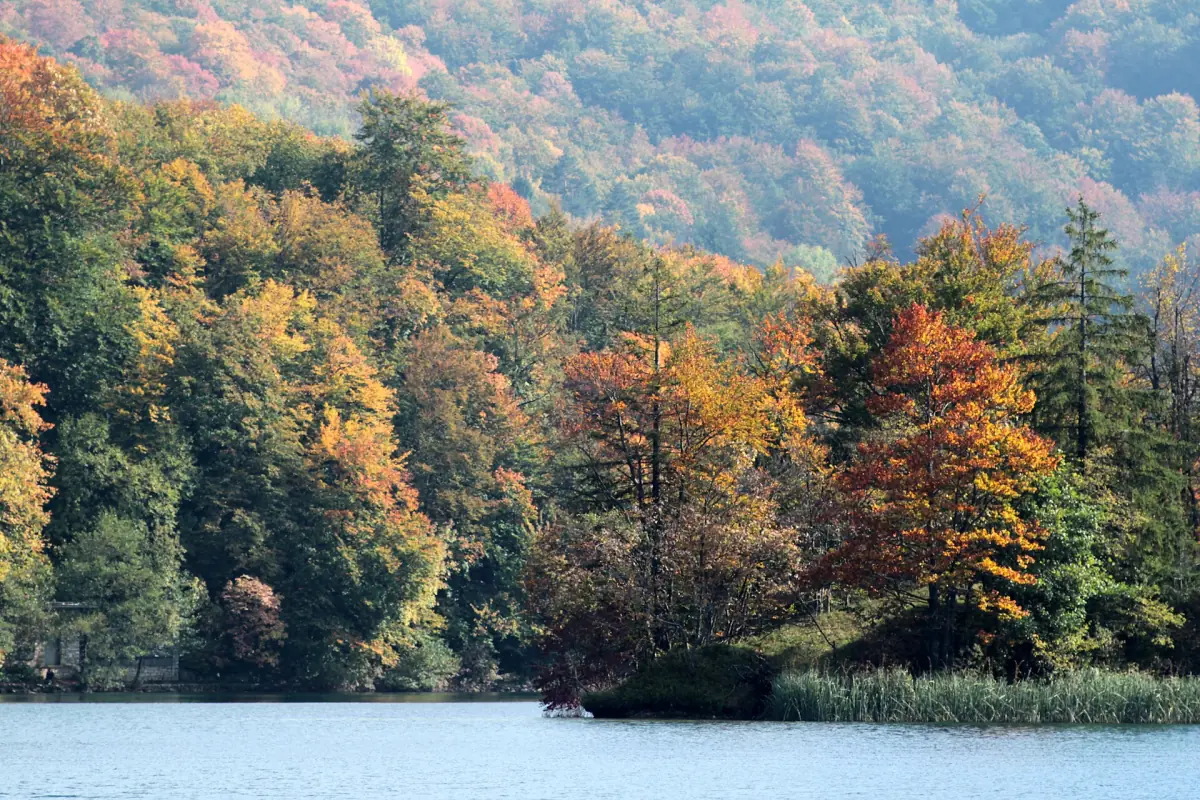
Plitvice Lakes tours and day trips
Day trips and guided visits to the lakes, with live prices and availability.
How travertine builds the lakes
The lakes are held back by barriers of travertine, also called tufa. These barriers form when lime settles out of the flowing water and builds up. Water pools behind each barrier and spills over it as a cascade or waterfall.
The process is still going on, so the system of barriers and lakes keeps changing slowly. That living system is a central part of the World Heritage value.
For you, this means the paths and boardwalks run over and between the barriers. Stay on them, because leaving the marked route is not allowed.
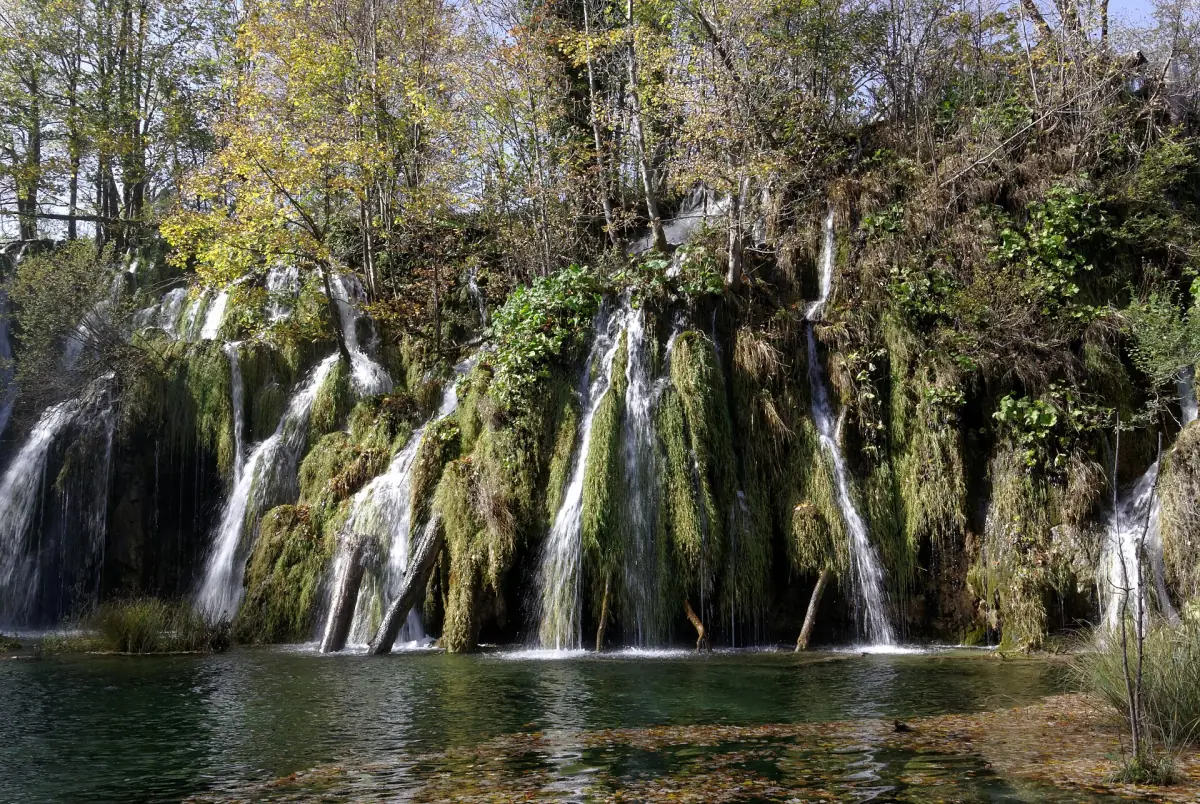
UNESCO status and boundaries
Three dates that are often mixed up.
1979: listing
Plitvice Lakes were inscribed on the World Heritage List in 1979. The listing rests on criteria (vii), (viii) and (ix).
2000: major boundary change
The World Heritage boundary was changed in a significant way in 2000. A smaller change followed in 2025, so the 2000 change is not the latest one.
1997: national park expansion
The national park itself was expanded in 1997. This is a separate decision from the UNESCO boundary changes, and the two areas are not automatically the same.
The history behind these dates is on the history page.
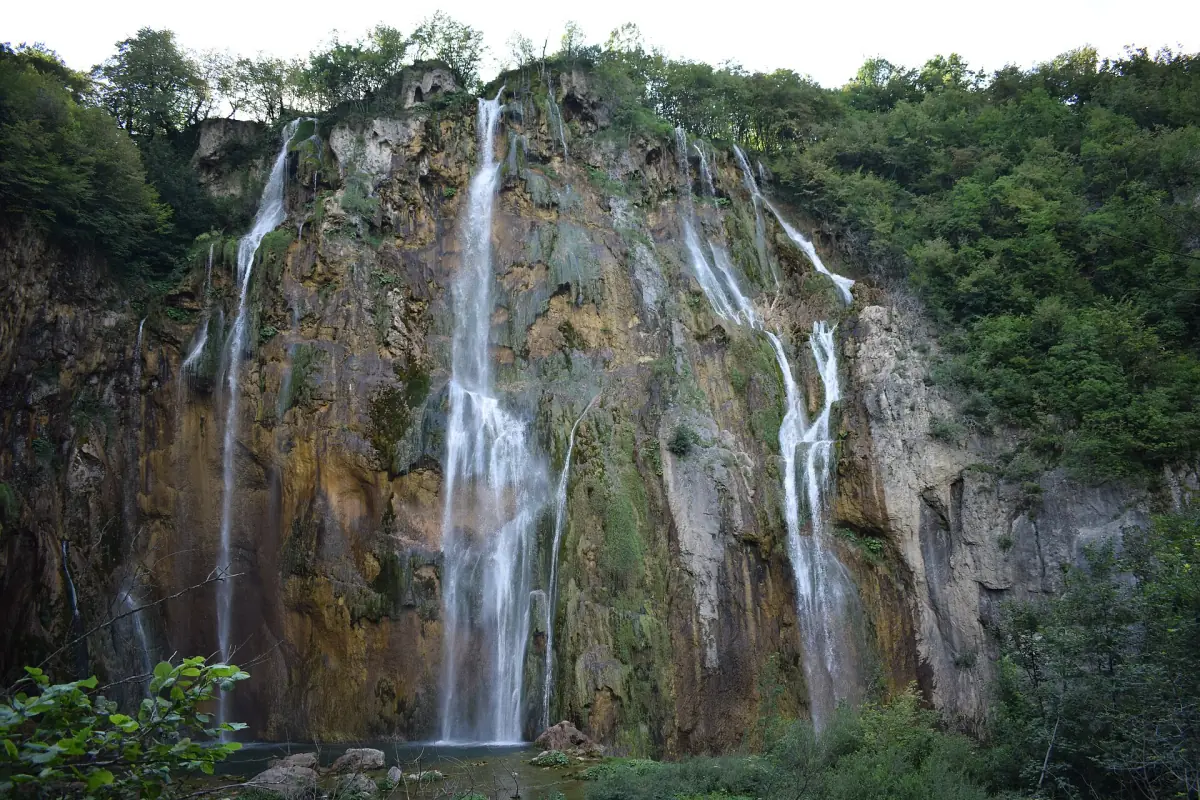
How high is the big waterfall?
Veliki slap, the big waterfall, has different heights because the measuring point differs. One figure is 78 m. Another measures 62 m down to the first pool and 87 m including the cascades below it.
Neither number changes the walk. You see the fall from the viewpoints on the lower lakes route. The big waterfall page explains the viewpoints and the paths that lead there.
Park rules in short
Calm, practical rules that apply to every visitor.
No swimming
Bathing in the lakes is not allowed anywhere in the park.
Stay on marked paths
Use only the marked paths and boardwalks. Do not leave them for a photo.
Animals and plants
Do not feed or disturb animals. Do not pick or damage plants, rocks or trees.
No fire, camping or fishing
Fires, camping and fishing are not allowed. Take your litter with you.
Dogs, drones and bikes
Dogs must be on a leash. Drones for aerial photos are not allowed. Bicycles are not allowed under the visitor rules.
Access for all
Not every regular lake route suits a wheelchair. Park staff can suggest suitable paths on the day.
Facts that help with planning
What a ticket and the park calendar mean in practice.
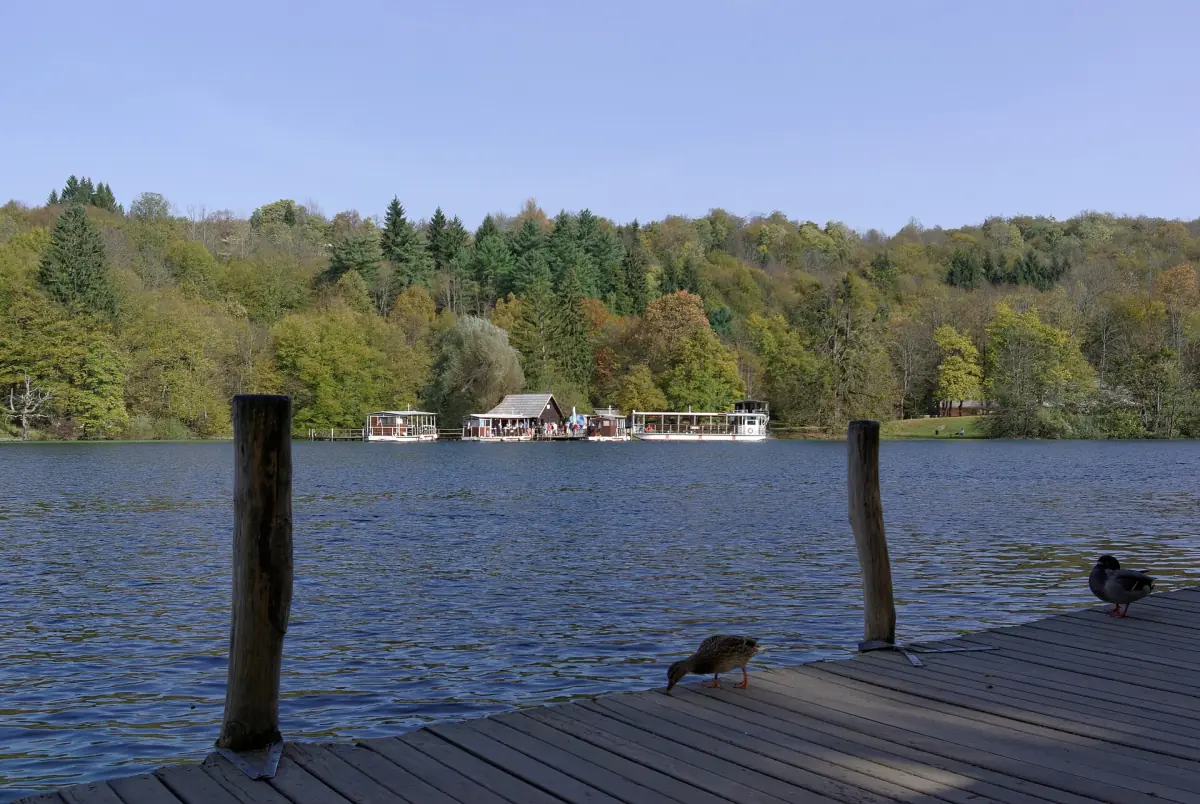
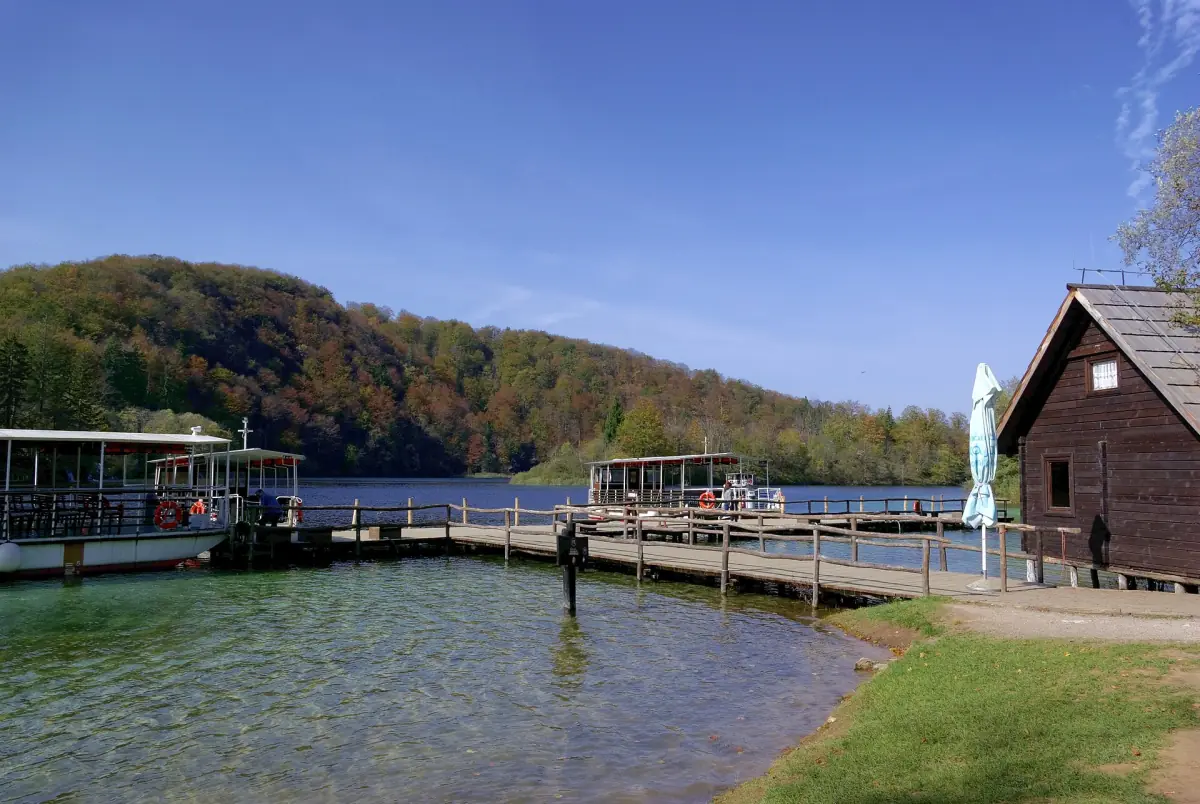
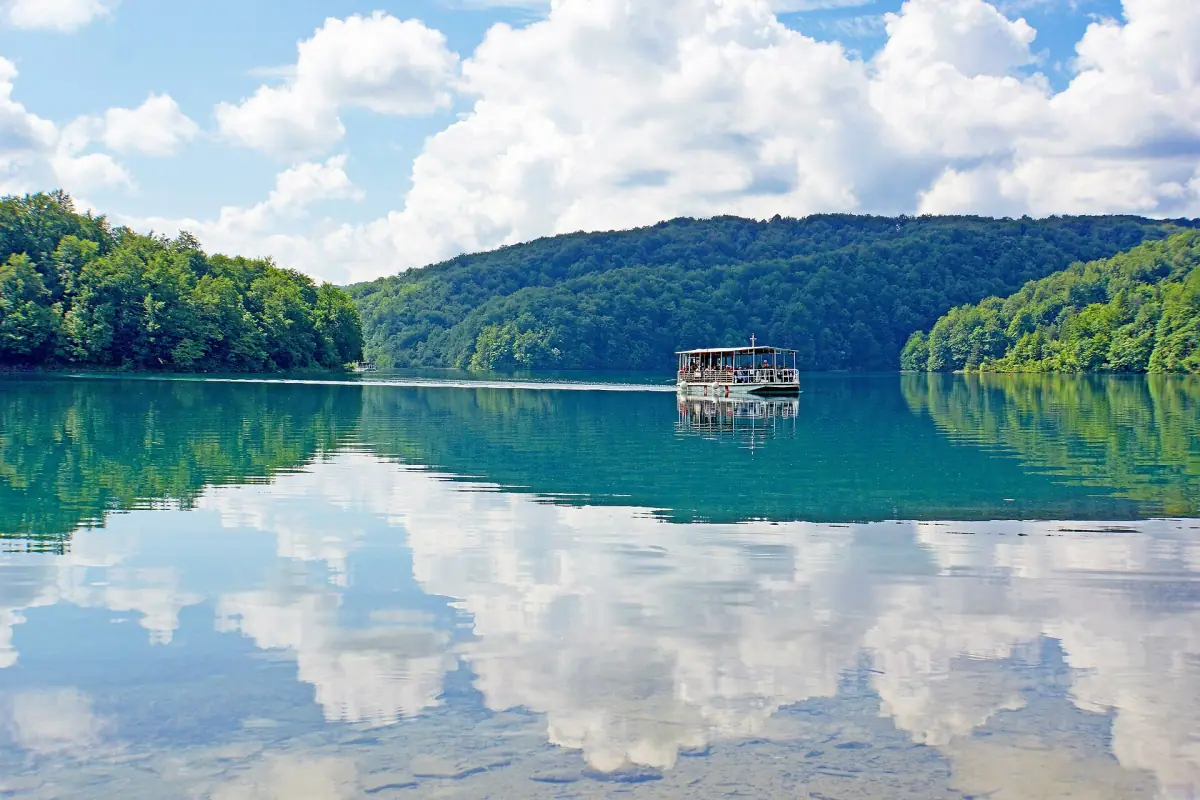
The park is open 365 days a year, but the hours change with the season and not every path or entrance is reachable in every kind of weather. A 2026 ticket includes the electric boat and the panoramic vehicle according to the route program you choose, plus visitor accident insurance and VAT. Adult day tickets run from €10 in the low season to €40 in peak summer.
Plitvice Lakes facts: frequently asked questions
How many lakes are there at Plitvice?
There are 16 named lakes: 12 upper lakes and 4 lower lakes. Smaller lakes without a name come on top of that number.
Which lakes are the lower lakes?
The four lower lakes are Milanovac, Gavanovac, Kaluđerovac and Novakovića brod.
When did Plitvice become a UNESCO site?
The listing dates from 1979. The boundary was changed in a major way in 2000 and in a smaller way in 2025. The national park expansion of 1997 is a different event.
Can you swim in the lakes?
No. Bathing is not allowed anywhere in the park. Walk on the marked paths and boardwalks only.
How tall is the big waterfall?
You will see 78 m, and also 62 m to the first pool or 87 m including the cascades. The numbers measure from different points.
Is this website the official park site?
No. This is an independent guide. For access, operations and ticket rules at the park itself, the park administration is the contact.